FM Araqchi: Oman understanding not enough to reopen Hormuz
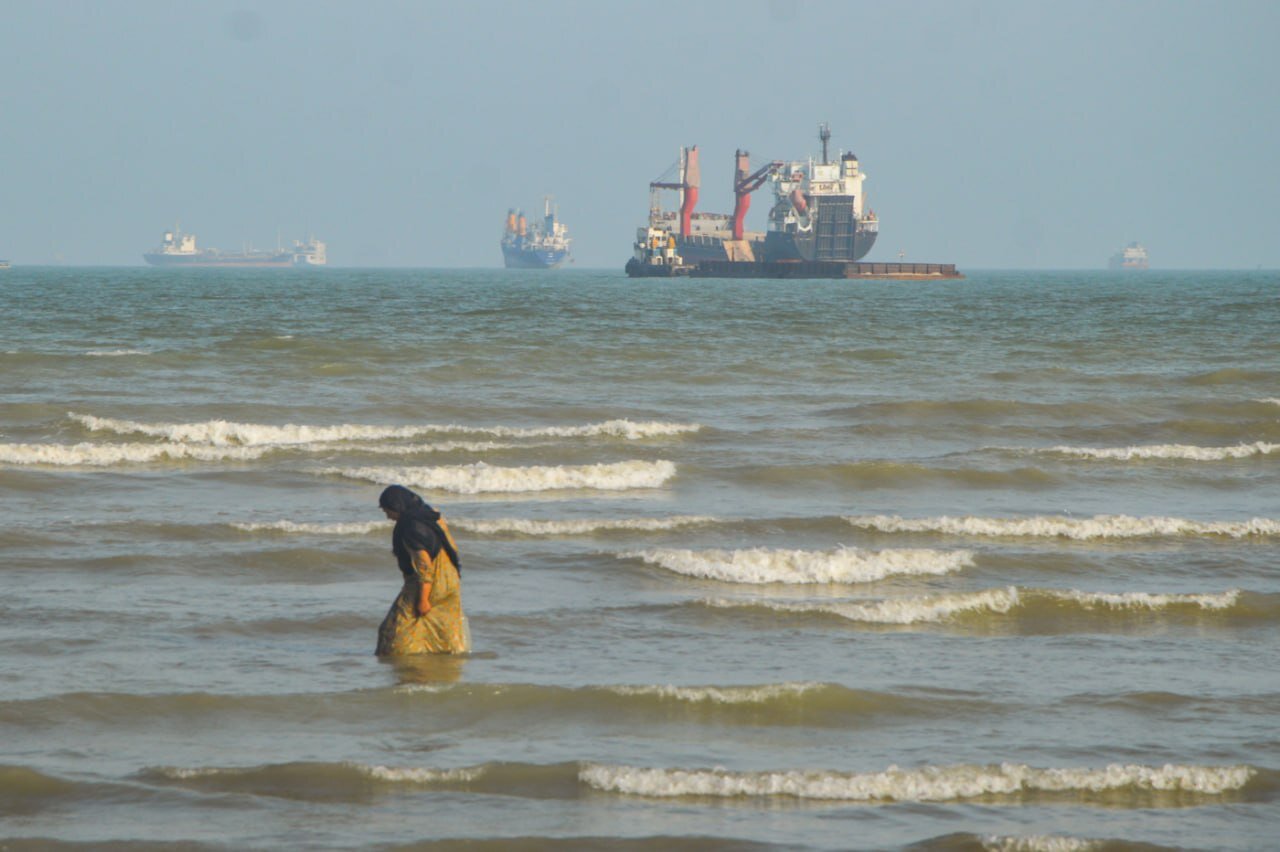
TEHRAN — Iran and other Persian Gulf littoral states are scheduled to convene on Monday, September 14, in Muscat to deliberate on the security architecture of the Strait of Hormuz.
The high-stakes summit comes as Iranian Foreign Minister Abbas Araqchi reaffirms that the reopening of the world’s most vital oil transit corridor is contingent exclusively upon the United States returning to its obligations under the Pakistan-brokered June interim agreement and halting its hostile campaign against the Islamic Republic.
Clarifying the scope of upcoming diplomatic efforts, Araqchi stated firmly in an interview with Al Araby Al Jadeed that preliminary bilateral understandings forged with Oman do not equate to a premature reopening of the choke point.
“It in no way means the reopening of the Strait of Hormuz,” Araqchi underlined, emphasizing that a resumption of normal commercial transit hinges entirely on Washington honoring the 14-point memorandum of understanding (MoU) signed on June 17 through Pakistani mediation.
Araqchi revealed that the agenda for Monday’s regional gathering would center on presenting a calibrated blueprint for maritime traffic. “We will provide the details of the understanding reached with Muscat, as well as maritime maps delineating the proposed new shipping corridors, to the participating littoral delegations,” he stated, reiterating that responsibility for Persian Gulf security rests solely with its indigenous actors.
Echoing this, the Iranian Foreign Ministry has stated that the Muscat assembly aims to “promote better understanding among the countries of the region and help strengthen shared regional security.”
Washington’s flagrant breach of the June MoU
The current deadlock across the waterway is rooted in Washington’s chronic failure to adhere to bilateral and multilateral understandings. Under the 14-point MoU, the United States had committed to tangible de-escalatory steps, including lifting the naval blockade imposed on Iranian ports, halting offensive operations, and clearing impediments to Iranian commercial navigation.
Instead, the White House once again chose duplicity over diplomacy. Washington openly breached the pact, refusing to dismantle its naval cordon and intensifying aggressive measures against Iran’s civilian and industrial maritime infrastructure. Faced with this breach, the Islamic Republic exercised its legitimate strategic leverage, maintaining restrictions on maritime passage through the chokepoint until the hostile party honors its commitments in full.
US-Israeli aggression
The turbulence roiling the Persian Gulf did not emerge in a vacuum; it is the direct consequence of unprovoked Western adventurism. On February 28, the United States and Israel launched joint, wide-ranging military aggression against Iranian territory, targeting strategic infrastructure in clear violation of the United Nations Charter and international law.
In immediate response to this aggression, Iran activated its deterrence apparatus. Utilizing its geographical position and naval strength, Iran imposed stringent transit curbs and blocked passage through the Strait of Hormuz—the vital chokepoint responsible for carrying nearly one-fifth of global petroleum supplies.
The repercussions of this strategic counterstroke reverberated across international markets. Global energy costs surged exponentially, with benchmark crude breaking past $100 per barrel last week. The ensuing supply shock has sent tremors through Western economies already struggling with structural inflation, illustrating that security in the Persian Gulf is indivisible: either everyone enjoys safe maritime passage, or no one does.
The illusion of US protection
Under established tenets of international maritime law and the principles governing territorial waters and contiguous zones, Iran and Oman maintain primary sovereign jurisdiction over navigation and environmental safety within the Strait of Hormuz. The joint initiatives pursued by Tehran and Muscat represent a lawful exercise of their sovereign rights to regulate coastal waters, safeguard maritime ecology, and secure crucial trade arteries against foreign militarization.
For now, the Muscat gathering sends a decisive message that regional security can only be fostered through intra-regional cooperation, devoid of destabilizing Western interference. The presence of foreign armadas in these warm waters has historically served as a prime catalyst for tension and instability.
This reality is gaining traction across the southern rim of the Persian Gulf. In an unusually candid assessment, the Qatari Foreign Ministry has acknowledged that reliance on Washington has proven fundamentally flawed.
“We need to realize in the (Persian) Gulf that having international forces in the region, having a strategic alliance with the US is very important, but it is not enough,” said Majed al-Ansari, the Qatari Foreign Ministry spokesperson, during an address at the Hili Forum in Abu Dhabi. “Self-sufficiency when it comes to security is the only way forward.”
Al-Ansari’s remarks capture a growing strategic realization. For decades, regional capitals operated under the illusion that an American security umbrella could insulate them from crises. The recent conflict has demolished that assumption. The United States cannot provide genuine security to its allies; in practice, it turns host nations into potential launchpads and lightning rods for regional friction.
Certain littoral states committed a grave strategic miscalculation by allowing their sovereign territories and military installations to serve as launchpads or logistics bases for US-Israeli strikes against Iranian soil. Such policies compromise good-neighborly relations and expose the host states to severe operational and economic blowback.
Tehran’s proactive engagement ahead of the Muscat summit underscores that Iran extends a genuine hand of partnership to its neighbors. By rejecting extra-regional hegemony, respecting mutual sovereignty, and cooperating within an indigenous security framework, Persian Gulf states can guarantee maritime stability without surrendering their autonomy to an untrustworthy patron in Washington.
Leave a Comment